
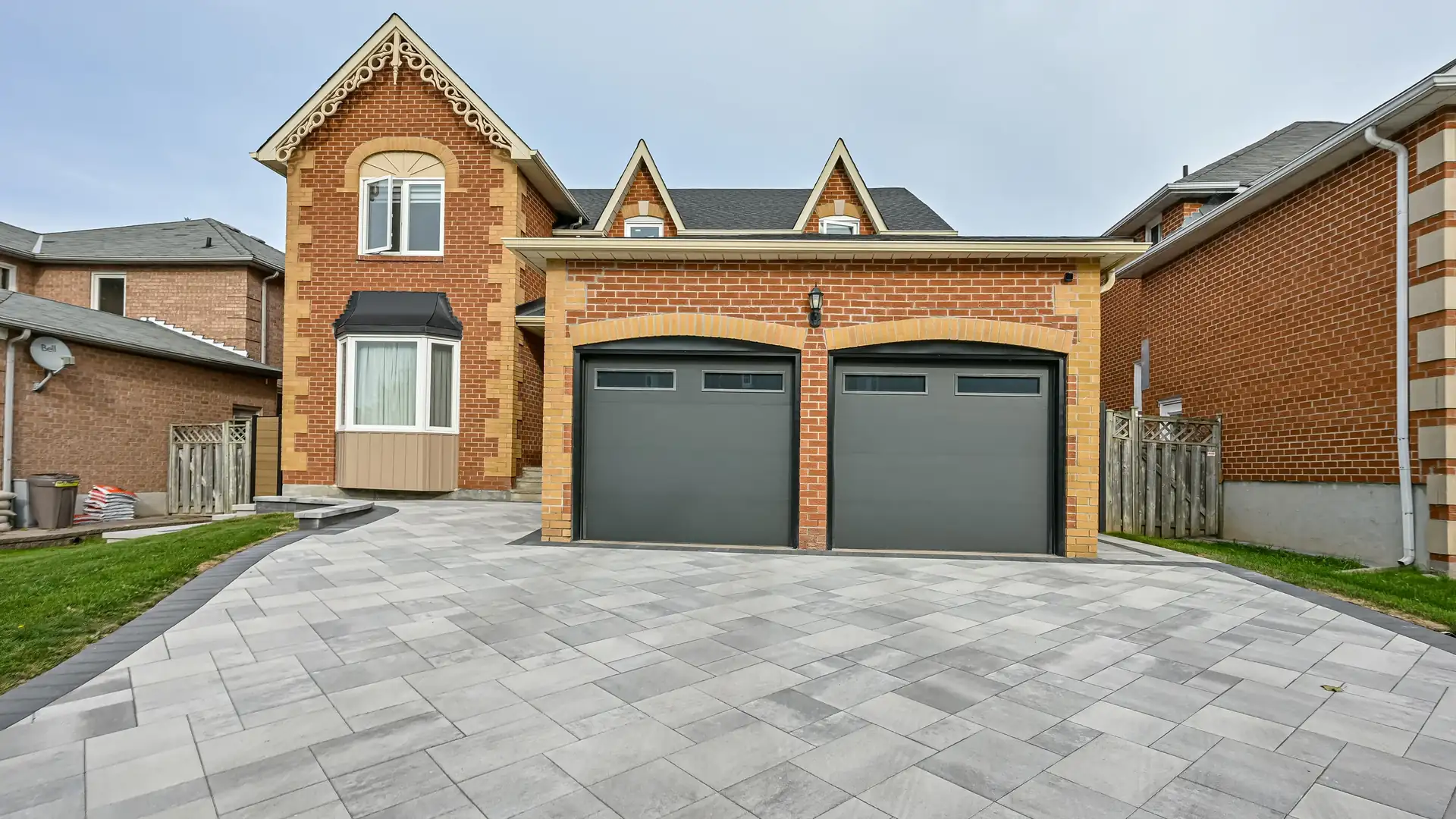
Interlock Driveway Installation and Repair in Toronto and the GTA
Sinking pavers, or done with cracked asphalt? See a starting price now. Most GTA driveways land between $15,000 and $45,000.
On this page · 9
See Your Starting Price
Nothing to pay until you sign. Then 25% to book your start date, and 75% only after you walk the finished job with us.
Your written quote lists every item, including digging, hauling away and drainage. The price holds for 30 days.
3-year written workmanship warranty. It covers sinking and shifting caused by our base work.
Your Online Estimate So Far
Combined Total
Repair the Trouble Spot or Replace the Driveway?
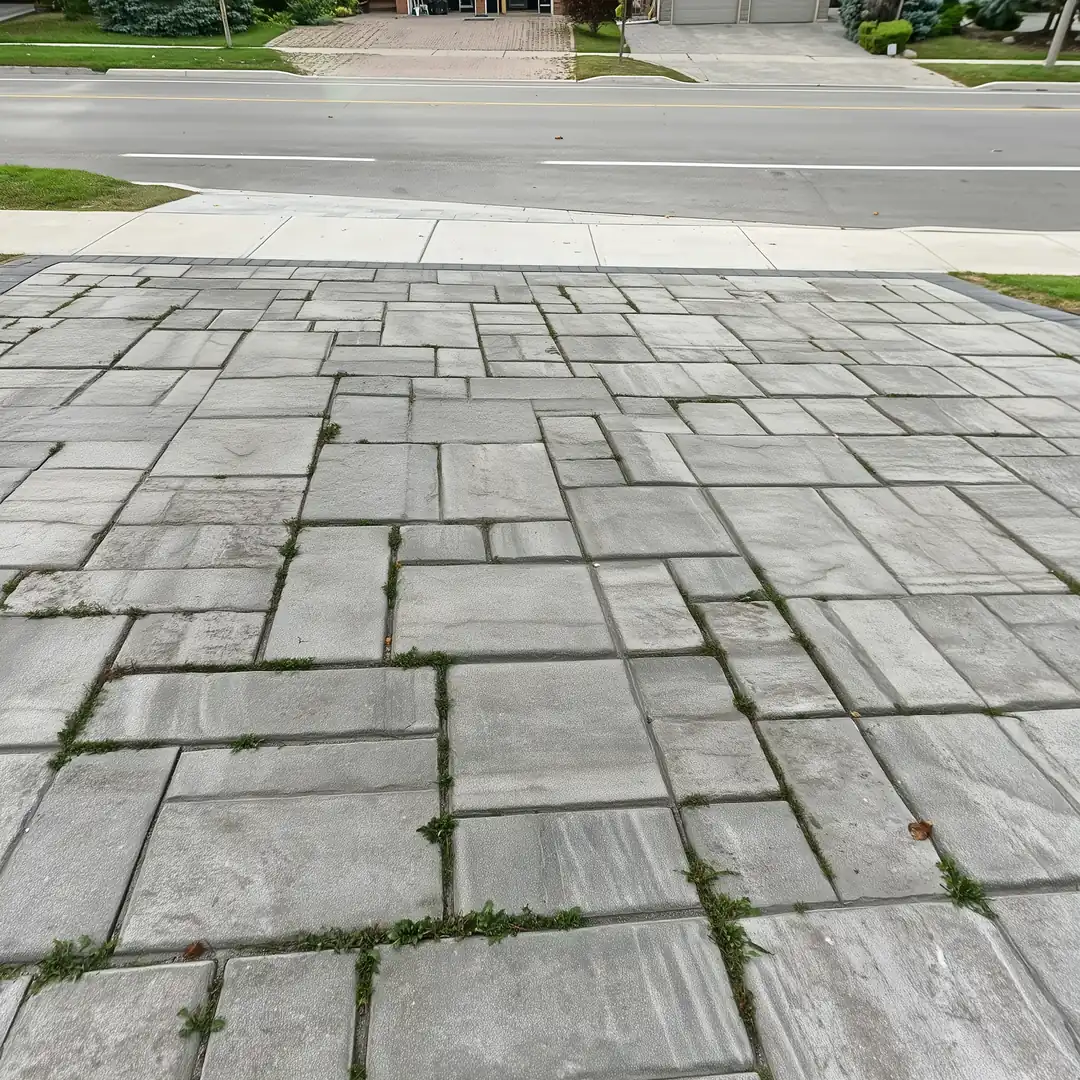
A sunken patch doesn't always mean a new driveway. Loose edging, washed-out joints, a weak base or water under the pavers can all cause a dip.
If lifting and resetting one section fixes it, that's what we'll quote. We only price a full rebuild when the base under most of the driveway has failed.
Is a Sunken Driveway Urgent?
- Fix it soon if water stands in the dip for more than a day, the dip is next to the house or garage, or pavers have lifted enough to catch a foot or a snow shovel.
- It can usually wait for a dry season if one small dip has stayed the same size for a year and drains after rain.
Not sure if it's a repair or a rebuild? Book a free visit. We'll tell you which, and why.
What a Driveway Costs in the GTA
October 2026, before HST
| Driveway | Typical price |
|---|---|
| Per square foot, common setups | $22 to $45 |
| 800 to 1,000 sq ft, replacing asphalt, standard lot | $20,000 to $35,000 |
| Most projects overall | $15,000–$45,000 CAD |
| Large, with concrete removal, drainage or tight access | Can pass $50,000 |
What pushes the price up: a decorative pattern, premium stone, clay soil, a slope, concrete removal, or no machine access.
May to August starts usually cost 10 to 15% more. A fall start, or booking in winter for early spring, usually costs less.
Why One Driveway Quote Is Twice the Other
Two quotes for 900 square feet can describe two different driveways. Ask whether the price covers removing the old surface, hauling it away, digging, packing the base, drainage, edging and the stone you chose.
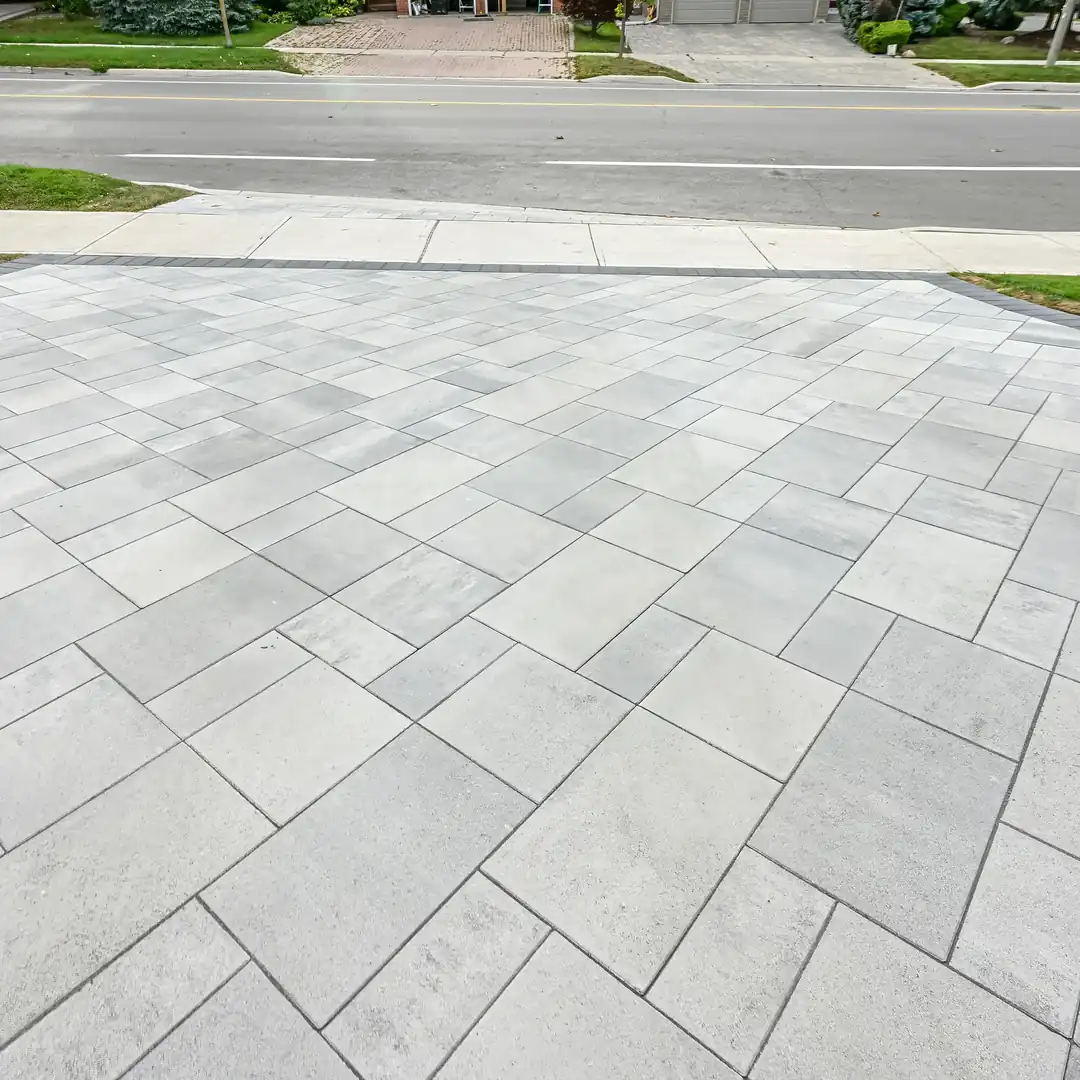
Your written quote names the digging depth, the gravel base and its thickness, filter fabric where needed, the paver product and thickness, the edging, the joint sand and any drainage parts. The paver, format and colour you pick are named exactly. No swaps without your written OK.
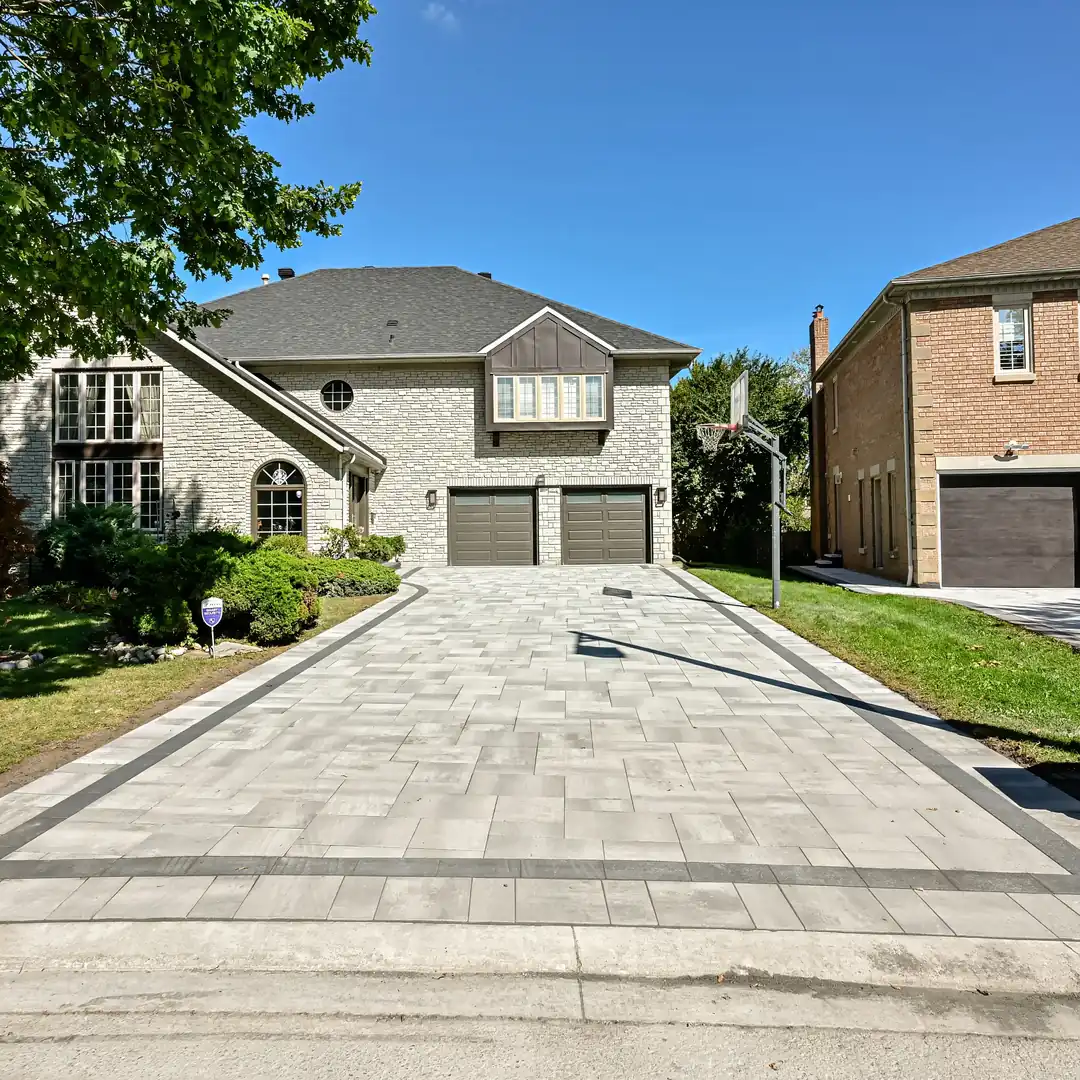
What's Under Your Driveway
People judge a driveway by the stone, but it fails from the base. Here's what goes under yours.
Base Preparation
We build the gravel base in thin layers, packing each with a machine and checking it before the next goes down. Soil, vehicle weight and frost depth decide how deep and how many layers. A thin or loosely packed base is the most common reason driveways sink. We don't shorten this step to finish sooner.
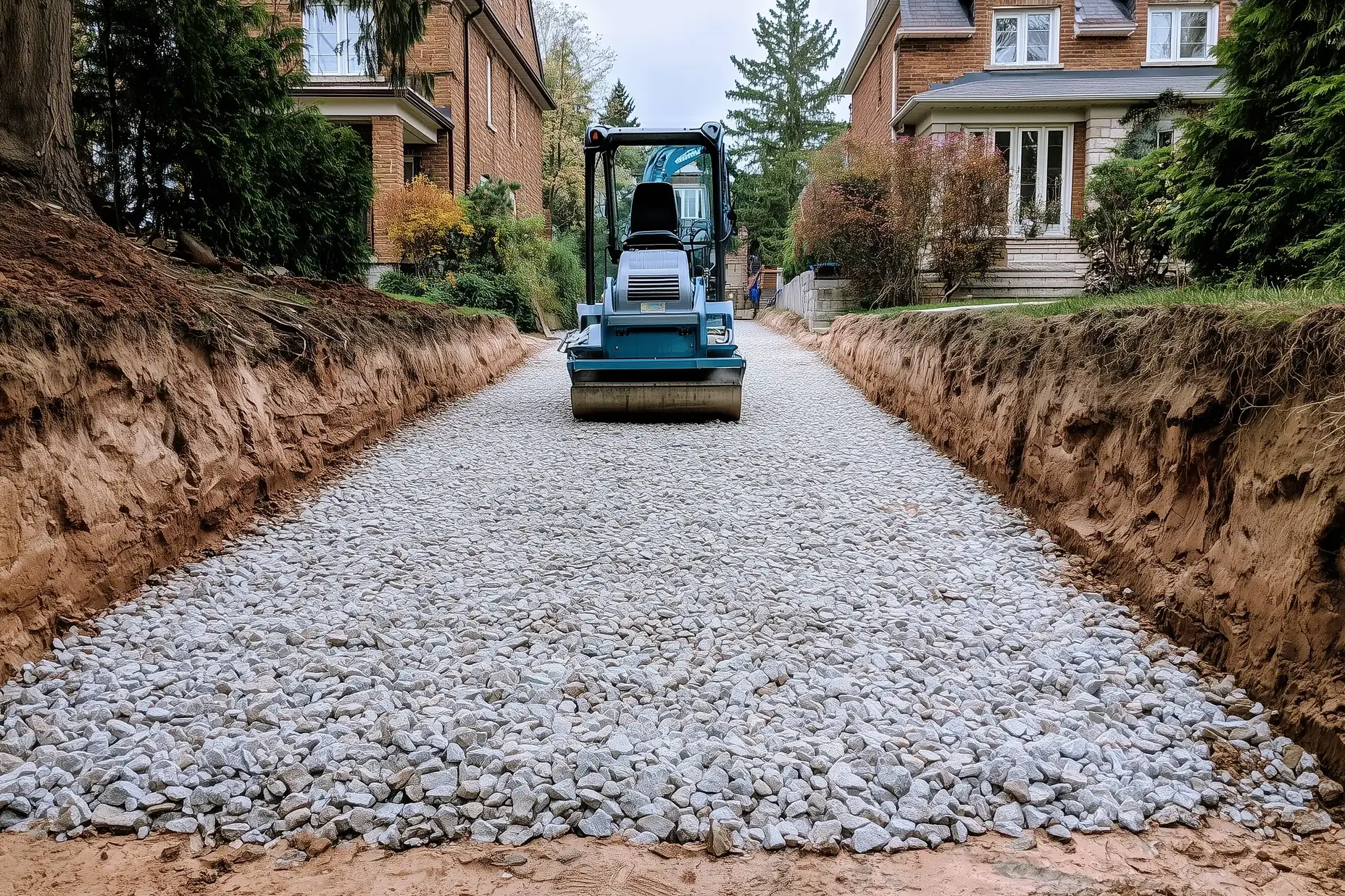
Digging Depth
We dig 12 to 18 inches below the finished surface, depending on soil, vehicle weight and drainage. Clay soil, common in Richmond Hill, Markham and Vaughan, needs a deeper dig and a filter fabric that keeps clay from creeping up into the gravel.
Edging
Edge restraints hold the outer pavers in place so the surface can't spread under cars and frost. We spike concrete or heavy-duty plastic edging into the packed base along every open edge. Without it, border pavers drift outward and the joints open up.
Joint Sand
Polymeric sand is swept into the joints and wetted so it sets firm, which keeps out weeds and ants and stops pavers from shifting. The driveway stays dry for 24 hours after. Plan to top up the sand every 5 to 10 years where water and traffic wear it away.
Drainage
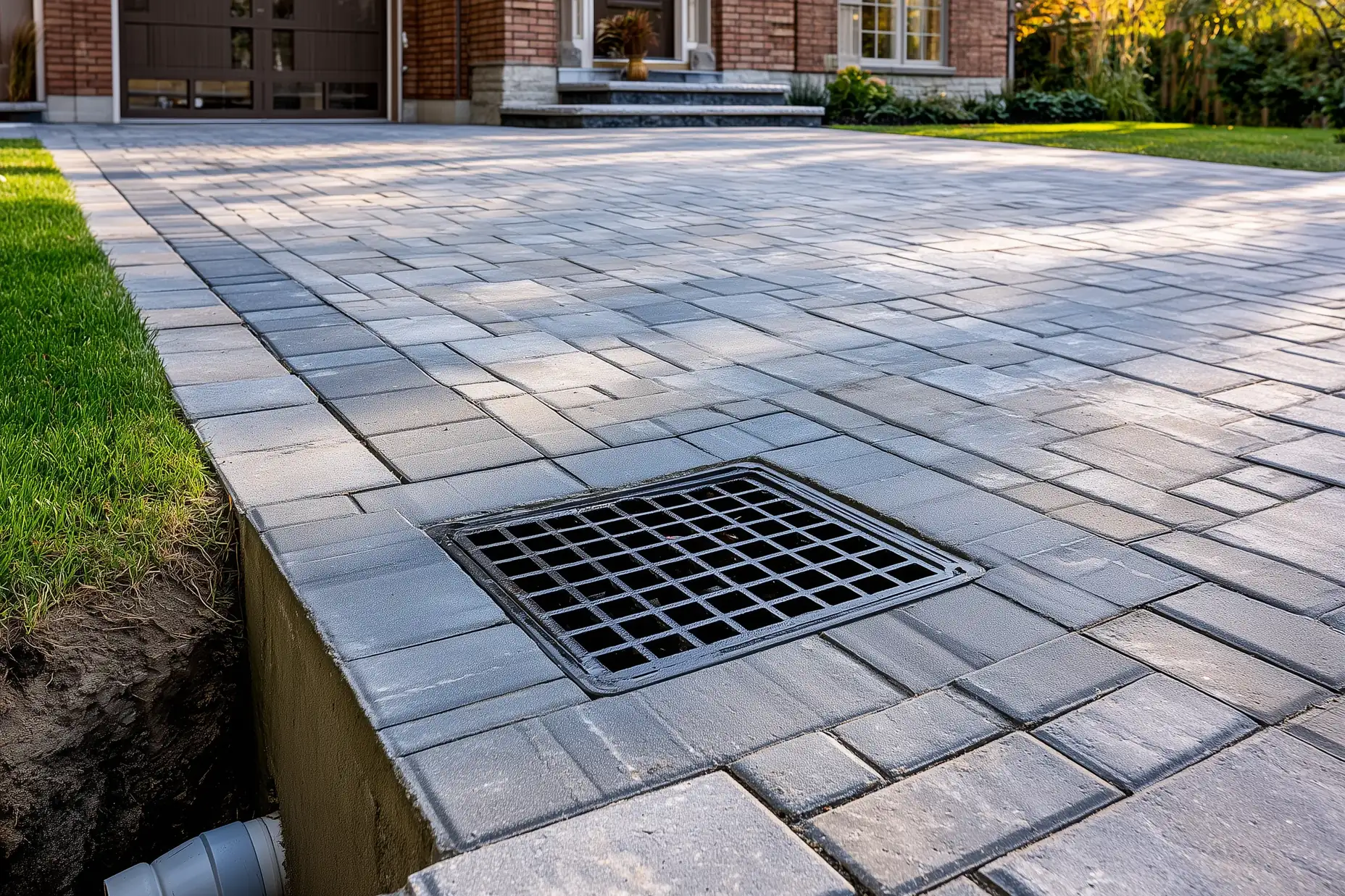
We slope the finished surface so water runs away from the house and toward the street or lot edge. Where the ground is too flat, we add a catch basin and a buried pipe to carry water away from the base. Water sitting under the pavers is the second most common reason a base fails.
Materials
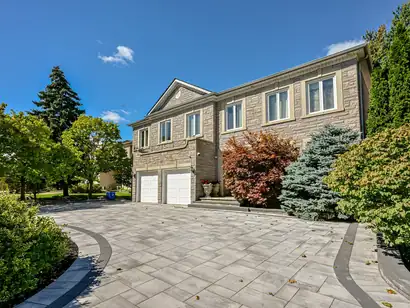
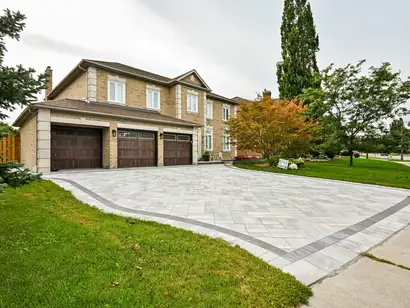
Driveway pavers are 60 to 80 mm concrete units made for cars and freeze-thaw. Choose 80 mm if trucks or heavy vehicles park on it often. Styles run from standard rectangles to large slabs and tumbled cobbles.
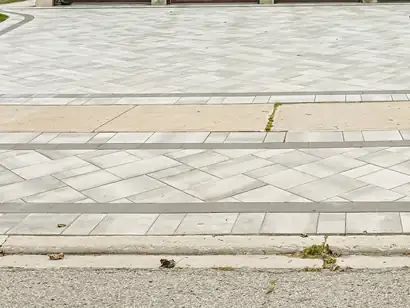
Care and Winter
Power wash once a year, check the joint sand, and top it up where it has washed out. Sealing is optional; it keeps the colour but doesn't make the driveway stronger. Keep steel plow blades off the pavers. Use a calcium chloride de-icer sparingly, or clean sand for traction. Avoid rock salt; it can scale pavers and void some paver warranties.
Driveway Repairs We Do
Sunken sections, shifting pavers, cracked stones and pooling water almost always have a fixable cause. With interlock, you can repair one area without replacing the rest. We find the cause, fix it at the source, and relay the surface level.
- Sunken or uneven sections: caused by a weak base, settling soil or poor packing the first time. We lift the pavers, rebuild the base to the right depth in packed layers, and relay the surface flush.
- Frost heave: pavers that rose after a hard winter because water froze under a thin base. We lift the area, fix the drainage or base depth, and relay the stones level.
- Single cracked pavers: we pull and replace cracked, chipped or stained stones with matching pavers. When an exact match is no longer made, we help you pick the closest colour and texture.
- Edging that pulled away: we re-stake or replace the edging and reset the border stones that drifted.
- Washed-out joint sand: we power wash, let the surface dry, and sweep in fresh polymeric sand.
- Pooling water: we regrade the surface, fix the slope of the pipe below, or add a catch basin so water stops eating the base.
Repair visits are free, so you know the full scope and cost before any work begins.
Full Driveway Replacement
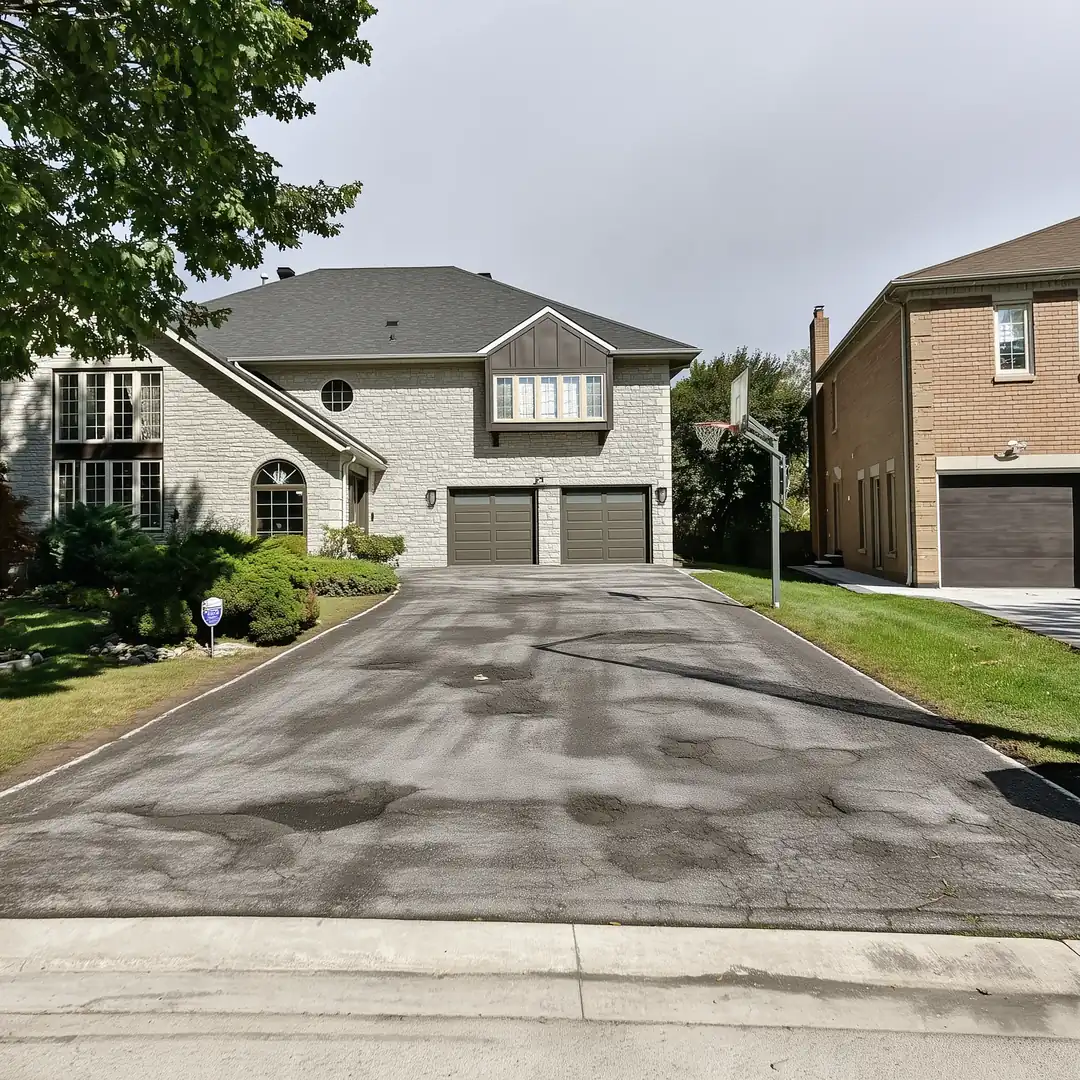
When a driveway is past repair, replacing it lets us fix whatever made it fail early. Interlock is a common choice for homeowners in Toronto, Richmond Hill and Markham replacing old asphalt or concrete.
- Replacing asphalt: we remove the cracked asphalt and its old base, dig to the right depth, and build a packed gravel base before laying the pavers.
- Replacing concrete: we break up and remove the concrete. A cracked paver gets swapped on its own. You never patch the whole surface.
- Full rebuild: when the first installation was poor or water has ruined the whole base, we remove everything down to the native soil and start again.
Interlock vs Asphalt vs Concrete
| Compared | Interlock | Asphalt | Concrete |
|---|---|---|---|
| Lifespan in Ontario | 25 to 40 years with upkeep | 15 to 20 years | 25 to 30 years |
| A section sinks or cracks | Lift and relay that section | The patch shows | Cut out and repour |
| Winter salt | Choose a salt-rated paver | Tolerates it | Can scale |
| Up-front cost | Highest | Lowest | Middle |
Buyers notice a level, weed-free driveway. Few notice a new one. They do notice a sunken one.
What to Expect During Installation
Materials arrive before day one, so the crew isn't waiting on a truck mid-job. We dig to the agreed depth, pack the gravel in layers, and set no stone until the base is checked.
Most driveways take 4 to 7 working days; large or complex ones take 10 or more. Expect machine noise during working hours. Plan to park on the street for 4 to 7 days. You can walk on it the day we finish and drive on it after 24 hours.
On the last day, we set the joint sand, clean up the site and walk the finished driveway with you. You get care instructions for the first 30 days and your warranty details. You pay the balance after that walkthrough.
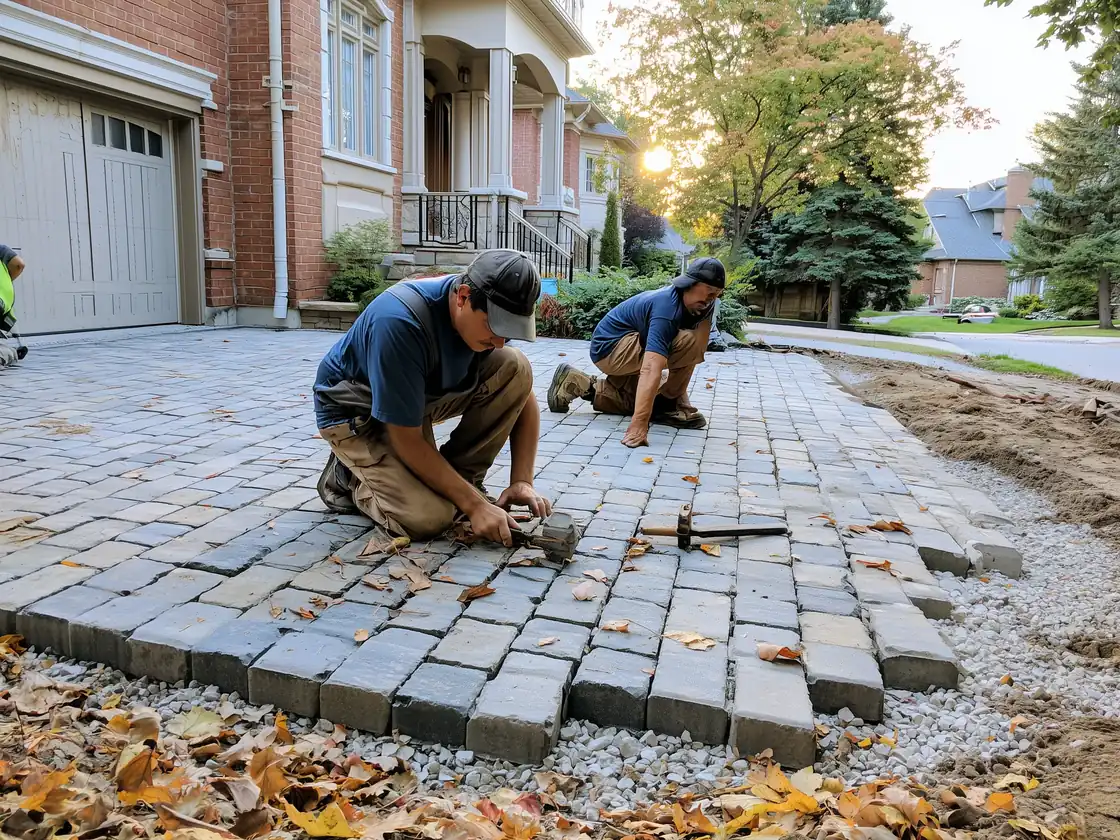
No stone goes down until the gravel base is packed and checked. It's the step you can't see later, so it's the easiest to cut.
Permits and Approvals
Most driveway replacements on your own property need no building permit. We apply for the right-of-way permit when your driveway touches the boulevard. The fee is listed in your written quote. These cases need a permit or approval:
- Work touching the boulevard, the road apron or the strip between the sidewalk and the street, needs a right-of-way permit in Toronto. Richmond Hill, Vaughan and Markham have their own road allowance permits.
- Widening a driveway or paving the boulevard is limited in Toronto and most GTA cities. We check your city's limit on hard surface before we finalize the design.
- A new or changed curb cut needs city approval, and the city usually names who may do the work.
- Raising or lowering the front yard in a way that changes drainage onto a neighbour's lot can need a grading permit, especially on newer lots with a registered grading plan.
Combine With a Walkway or Patio
A new driveway often needs a matching front walkway. If your project includes a walkway or a patio, run the estimator on each page. Your online estimate adds every service into one total.
Common Questions
How much does an interlock driveway cost in Toronto?
Most GTA interlock driveways cost $15,000 to $45,000 (GTA prices, October 2026, before HST). An 800 to 1,000 square foot driveway replacing asphalt on a standard lot usually runs $20,000 to $35,000, or about $22 to $45 per square foot. A decorative pattern, premium stone, clay soil or a slope push it higher.
How long does interlock driveway installation take?
4 to 7 working days for most driveways; 10 or more for large or complex ones. Weather and site access change the schedule, and we confirm it with you before we start.
How long does an interlock driveway last in Ontario?
25 to 40 years with upkeep. How long yours lasts depends most on the digging depth, the gravel base and the drainage under it.
How deep should the base be for an interlock driveway in Ontario?
We dig 12 to 18 inches, depending on soil and vehicle weight. The gravel goes down in thin layers, each packed with a machine, under a layer of bedding sand.
Why do interlock driveways sink or shift?
Most sink because the base was too thin, loosely packed or soaked by water that couldn't drain. Missing edging lets border pavers drift outward.
Can a sunken interlock driveway be repaired?
Yes. We lift the pavers in that section, rebuild the base and relay the same stones. You don't replace the whole driveway for one dip.
Is interlock better than asphalt in Toronto?
Interlock costs more up front but lasts longer, and a damaged section is lifted and relaid on its own. Asphalt is cheaper to start and its patches show.
Can interlock driveways handle snow and salt?
Yes, when the base and drainage are right. Use a calcium chloride de-icer sparingly, or clean sand for traction. Avoid rock salt; it can scale pavers and void some paver warranties.
Do I need a permit for an interlock driveway in Toronto?
Not for most replacements on your own property. Work touching the boulevard needs a right-of-way permit, which we apply for. A curb cut or widening needs city approval.
How do I choose an interlock driveway contractor?
Ask any contractor to put three things in writing: how deep they dig, how thick the gravel base is, and what the warranty covers. If they won't, keep looking.
Darteno Construction Inc. installs interlock driveways throughout Toronto, North York, Scarborough, East York, York, Etobicoke, Markham, Richmond Hill, Thornhill, Vaughan, Aurora, Newmarket, Stouffville, King City, Holland Landing and Bradford. We are insured, WSIB-covered, English- and Mandarin-speaking, and have built driveways for GTA homeowners since 2021. Estimates are free with no obligation. Call or text (647) 838-3200.