
Get an Instant Estimate
Your Quote So Far
Combined Total
Common Questions
How much does a walkway installation cost in Toronto?
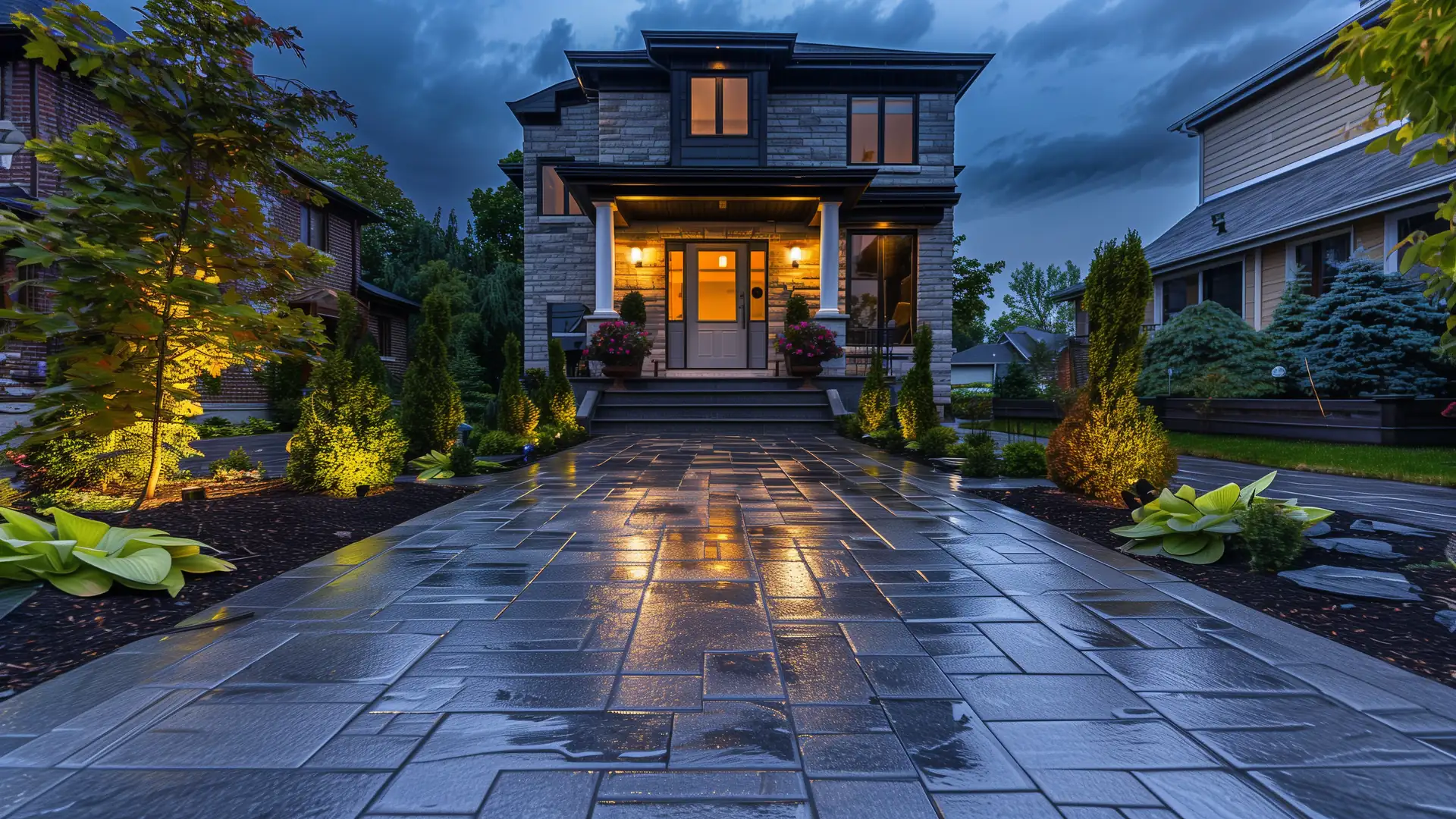
Most residential walkway projects in Toronto and the GTA range from $1,500 to $12,000 depending on size, material, and site conditions. A standard 100 to 150 square foot interlocking stone front entrance walkway typically runs $2,000 to $3,500 at current rates. Flagstone and large-format natural stone options run higher; gravel and stepping stone pathways run lower. Projects over 300 square feet, those with steps, or those requiring significant base work due to clay soil will fall at the upper end of the range. Use the estimator on this page for an instant quote.
What is the difference between an interlocking stone walkway and a flagstone pathway?
Interlocking concrete pavers offer a uniform, geometric look suited to formal front entrance walkways and areas that need to match an existing driveway or patio. Flagstone uses irregularly shaped natural stone for a more organic, textured appearance that works well in garden routes and naturalized backyard settings. Both can last 25 or more years with proper base preparation.
Do residential walkways in Toronto need a building permit?
Most walkways on private property do not require a building permit in Toronto or the GTA. A Right-of-Way permit may be required if the walkway crosses the municipally owned boulevard. Projects that include steps or significant grade changes, or that are in conservation regulated areas near ravines and floodplains may require additional approvals. Darteno confirms permit requirements during the free onsite consultation.
How wide should a residential front entrance walkway be?
Most residential front entrance walkways in the GTA are built 3 to 4 feet wide to comfortably accommodate two people walking side by side. Side-yard and garden paths are often narrower, in the 2 to 3 foot range. Final width depends on your site layout, available space, and how the walkway connects to the driveway or patio.
How long does an interlocking stone walkway last in Ontario?
A professionally installed interlock walkway in Toronto can last 25 to 30 years or more with proper base preparation and routine maintenance. The modular system tolerates minor ground movement without cracking, and individual stones can be lifted and reset if a section settles.
Can a settled or damaged walkway be repaired rather than replaced?
Yes. Interlock walkways can often be repaired at the section or individual stone level. Settled areas are lifted, the base is rebuilt, and the stones are relaid. Full replacement is typically only required when base failure is widespread or the original installation was significantly undersized.
What laying pattern is recommended for an interlocking walkway?
Herringbone is the strongest pattern for interlocking pavers and handles heavy foot traffic well. Running bond gives a cleaner, more directional look suited to front entrance walkways. Both perform well for residential pedestrian use with a properly prepared base.
How deep should the base be for a walkway in Ontario?
Most residential walkways in Ontario are excavated 7 to 9 inches below finished grade for pedestrian use. Clay-heavy soils common in Richmond Hill, Markham, and Vaughan may require a geotextile fabric layer to prevent fine particles from migrating into the base over time.
Can a new walkway be combined with a driveway or patio installation?
Yes. Front entrance walkways are commonly installed at the same time as a new driveway, and backyard paths often connect to a new patio. Coordinating the base preparation and edge details across multiple surfaces creates a cleaner result and often reduces overall cost. Use the estimator on each relevant service page; interlock driveways or patios. Your full quote will cover every service you select.
What causes walkway settling in Toronto?
Walkway settling is most commonly caused by insufficient base depth, inadequate compaction, clay soil migration into the granular base, or poor drainage that allows water to pool beneath the surface and undermine the base over freeze-thaw cycles. These are preventable through proper excavation, geotextile separation, and drainage grading.
How do I get a free walkway estimate from Darteno?
Use the online estimator on this page for an instant quote, or call 647 838 3200 to schedule a free onsite assessment. Darteno serves Richmond Hill, Vaughan, Markham, Toronto, and all GTA communities. Estimates are always free with no obligation.
Darteno Construction Inc. designs and installs residential walkways and pathways throughout Richmond Hill, Vaughan, Markham, Thornhill, Aurora, Newmarket, North York, Scarborough, Woodbridge, and Toronto. Whether you need a front entrance walkway connecting to your driveway, a side-yard path linking to a backyard patio, or a garden pathway through planting beds, we build walkways using the same base preparation standards as our driveways and patios. We are licensed, insured, English- and Mandarin-speaking, and have been serving GTA homeowners since 2021. All estimates are free. Call 647 838 3200 or visit 142 Valleymede Dr, Richmond Hill, ON.
What to Expect During Walkway Installation
Walkway installation begins with excavation to the specified depth, followed by subgrade preparation, granular base placement, and mechanical compaction before any stone is set. Most residential walkways across the GTA are completed in two to four working days, depending on length, material, and whether the path includes steps or curves. The full schedule is confirmed with you before work begins.
On the final day, joint material is applied and compacted, edge restraints are inspected, and the crew completes a full site cleanup. You will receive a walkthrough of the finished walkway, joint care instructions, and details on your warranty coverage. The balance of the project cost is due upon satisfactory completion of the final walkthrough.
Walkway Materials
Interlocking Stone Walkways
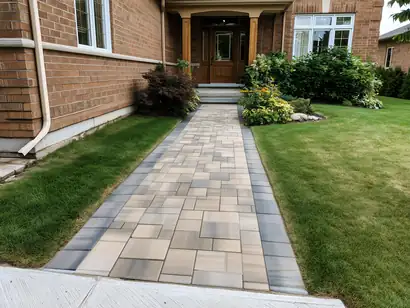
Interlocking concrete pavers are the most common choice for GTA walkways. The modular system tolerates minor ground movement without cracking, individual stones can be lifted and reset if a section settles, and the wide range of colours and formats allows the walkway to match an existing driveway or patio. A professionally installed interlock walkway in Toronto can last 25 to 30 years or more with proper base preparation.
Natural Flagstone Pathways
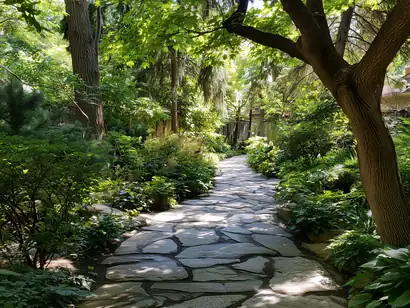
Flagstone walkways use irregularly shaped natural stone set in sand or screenings to create an organic, textured path suited to garden routes and natural garden settings. Flagstone pairs well with mature plantings and informal backyard designs where a uniform paver pattern would look out of place.
Gravel Pathways with Edging
Gravel pathways are a lower-cost option for secondary routes such as side-yard access or garden paths that do not carry the same traffic as a main walkway. A compacted base and steel or aluminum edge restraint keep the gravel contained and prevent migration into adjacent lawn or beds.
Stepping Stone Trails
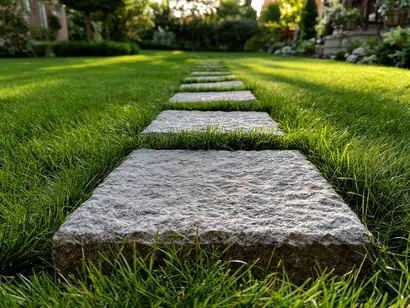
Stepping stone trails use individual stone or paver units set into sod or mulch beds, spaced for a natural walking stride. This option suits informal garden routes where a continuous hard surface is not required.
Base Preparation
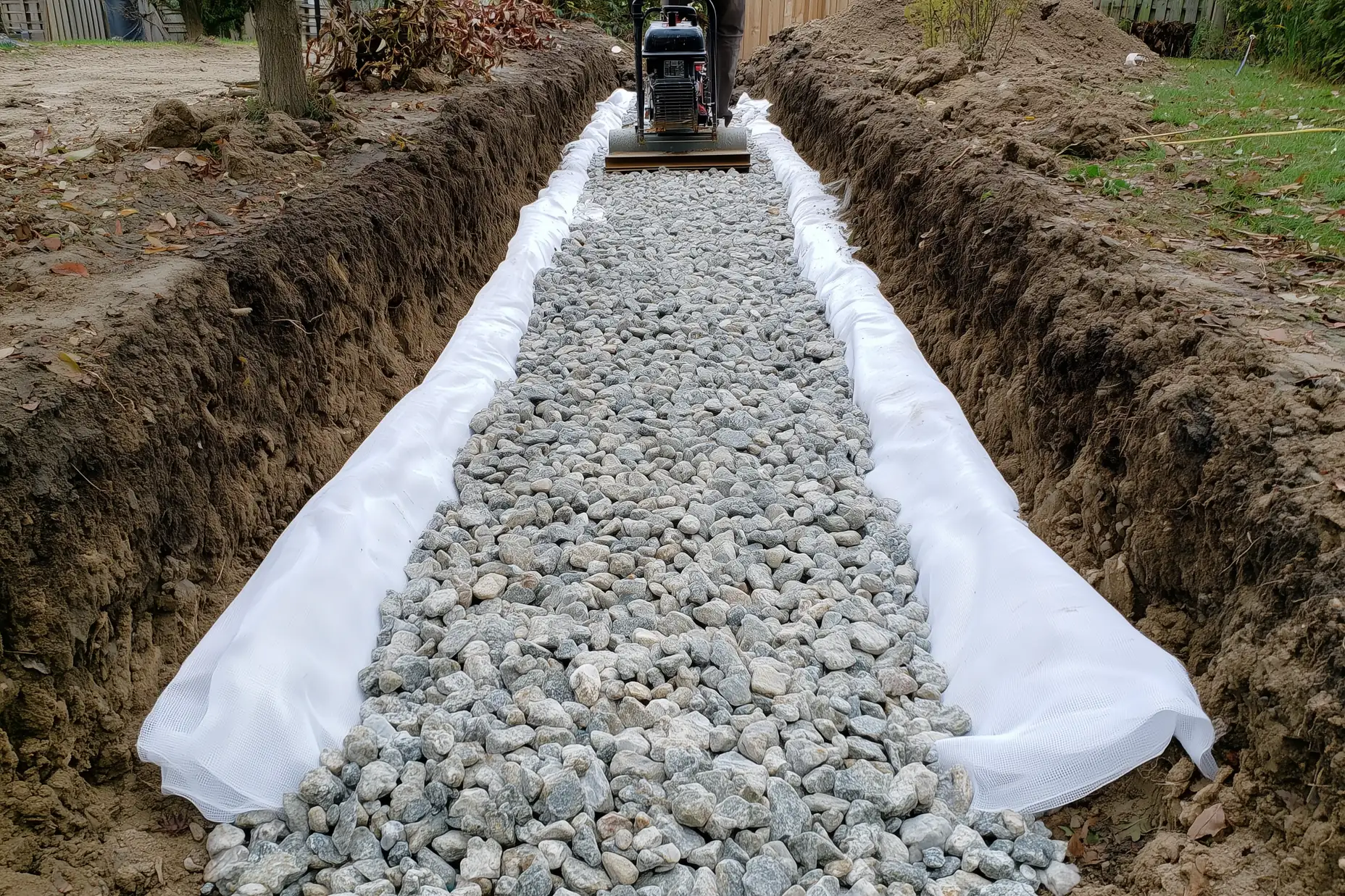
A walkway is only as durable as the base beneath it. For standard pedestrian use, excavation is typically 7 to 9 inches below finished grade. The subgrade is cleared of organic material and compacted. A geotextile fabric layer is placed where clay soil is present, which is common across Richmond Hill, Markham, and Vaughan, to prevent fine particles from migrating into the base. A compacted granular base of 6 inches or more is built up in lifts before the bedding layer and stone are placed. where clay soil is present, which is common across Richmond Hill, Markham, and Vaughan To prevent fine particles migrating into the base, and a compacted granular base of 6 inches or more is built up in lifts before the bedding layer and stone are placed. Edge restraints are installed along all exposed borders to prevent the path from spreading under foot traffic and frost pressure. This is the same standard of base preparation used on every interlock driveway and patio we build.
Laying Patterns
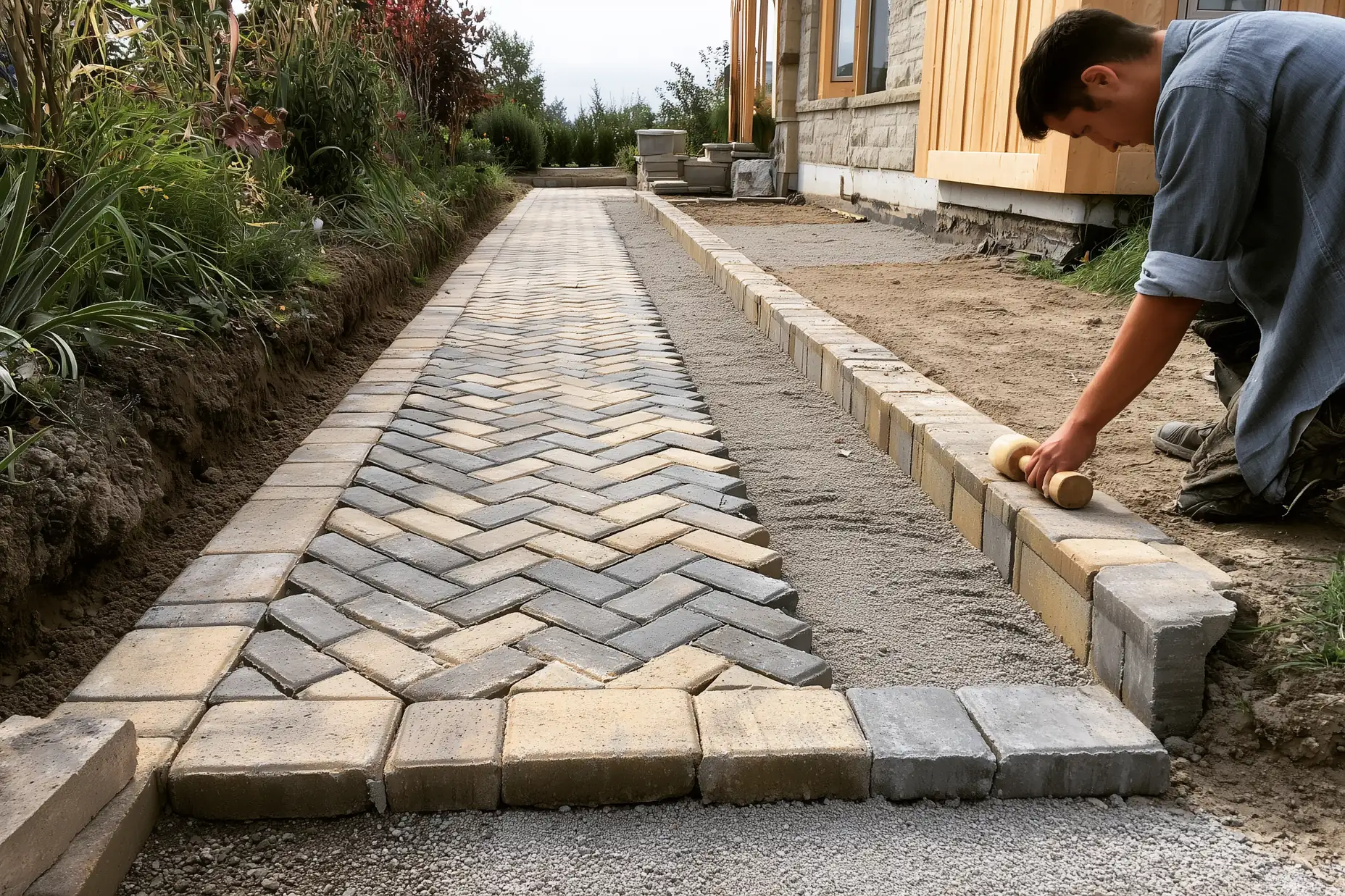
Laying pattern affects both the structural performance and the visual character of a walkway.
- Herringbone is the strongest pattern for interlocking pavers, well suited to walkways that see heavy foot traffic or connect to a driveway.
- Running bonds are parallel rows with offset joints that read as a clean, straightforward path; a common choice for front entrance walkways.
- Random or ashlar flagstones are irregular natural stone pieces set in a semi-randomized layout, suited to garden and naturalized routes.
Walkway Width and Sizing
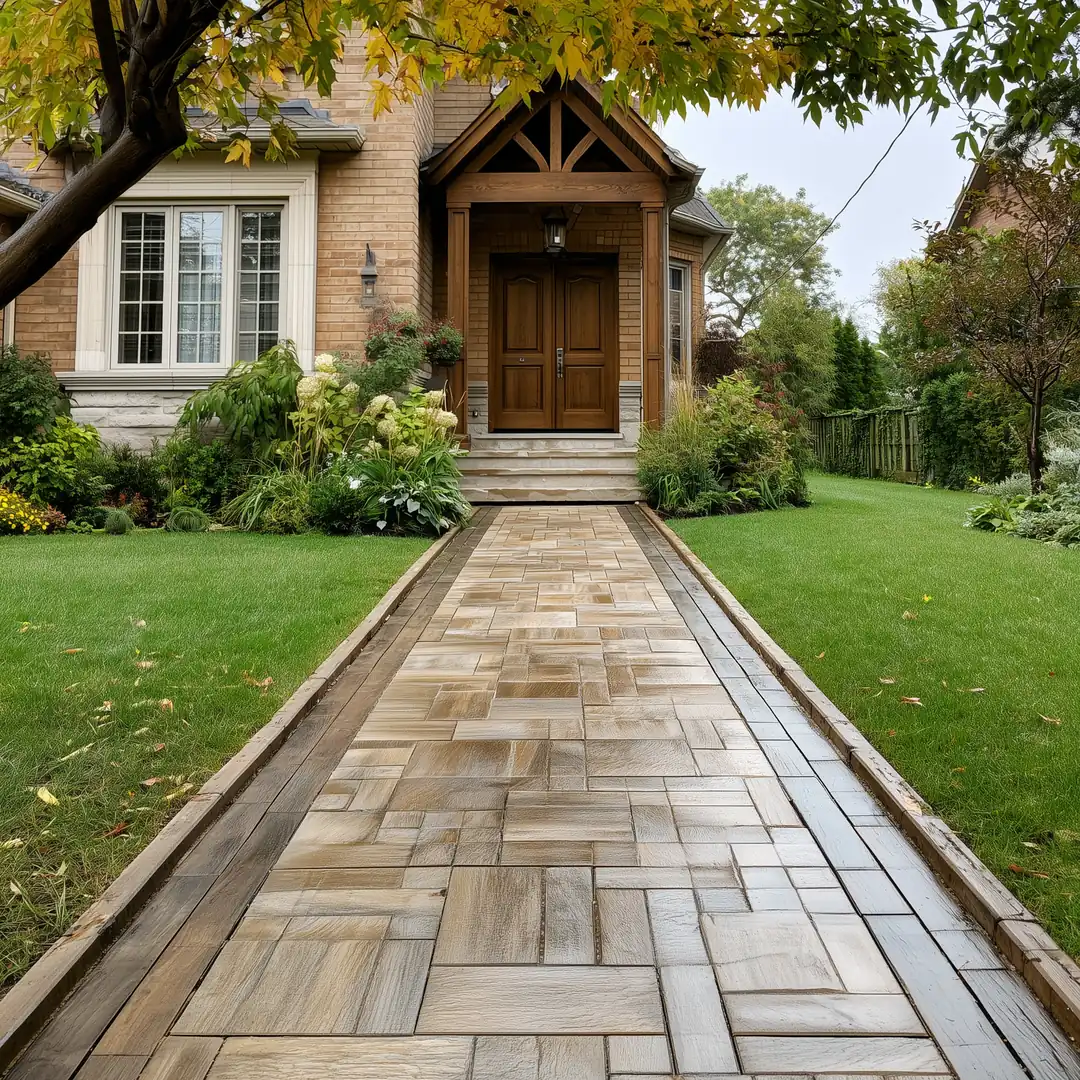
Most residential front entrance walkways are built 3 to 4 feet wide to comfortably accommodate two people walking side by side. Secondary side-yard or garden paths are often narrower, in the 2-to-3-foot range. Width, length, and material selection are the primary drivers of project cost. The online estimator on this page uses square footage to generate your quote.
Walkway Repair Services
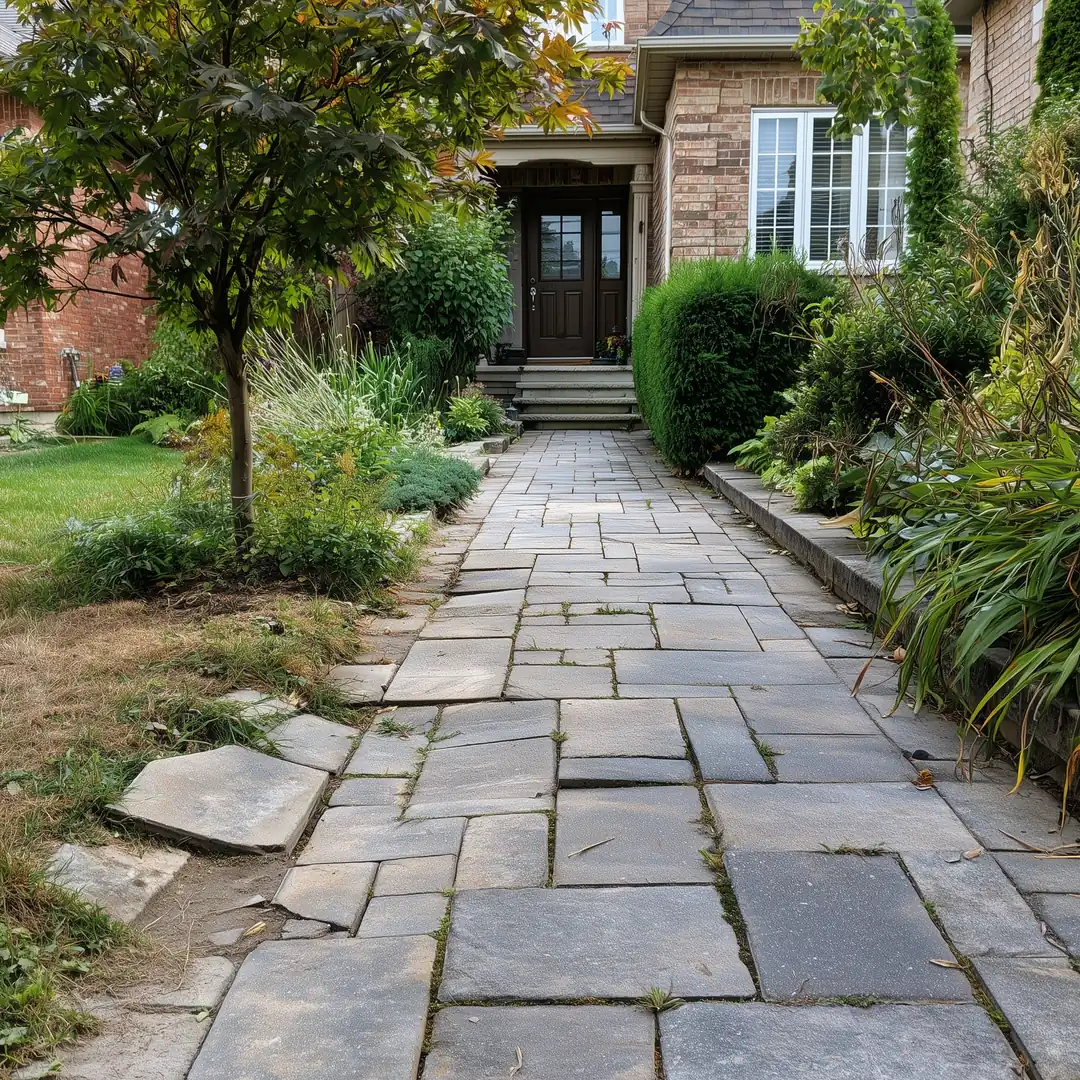
A walkway that has settled, shifted, or developed cracked or loose stones does not always need full replacement. Darteno provides free walkway repair assessments for homeowners in Toronto and across the GTA.
- Sunken or uneven section repair: Settled stones are lifted, the base is excavated and rebuilt to the correct depth, and the surface is reinstalled level.
- Individual stone replacement: Cracked, chipped, or stained pavers and flagstone pieces are pulled and replaced with a matching unit.
- Joint sand and joint material restoration: Eroded or washed-out joint material is replaced after the surface is power washed and dried.
- Edge restraint repair: Restraints that have pulled away allow border stones to migrate; we reseat and re-spike the restraint and reset displaced stones.
- Trip hazard correction: Raised or settled stones that create an uneven walking surface are reset to restore a safe, flush path.
Permits and Approvals for Walkways in Toronto
Most residential walkway installations on private property do not require a building permit in Toronto or across the GTA. A small number of situations introduce permit or approval requirements homeowners should confirm before construction begins.
- Boulevard or right-of-way work: A walkway section crossing the municipally owned boulevard between the sidewalk and the street may require a Right-of-Way permit from the applicable municipality.
- Steps and grade changes: walkways that include steps or significant elevation change as part of a larger structure attached to the home may fall under building permit requirements.
- Conservation authority regulated areas: Properties near ravines, floodplains, or valley corridors that fall within Toronto and Region Conservation Authority (TRCA) or Lake Simcoe Region Conservation Authority (LSRCA) regulated areas near ravines and floodplains, may require additional approvals.
Areas We Serve
Darteno installs walkways and pathways in Richmond Hill, Vaughan, Markham, Toronto, Thornhill, Aurora, Newmarket, North York, Scarborough, Woodbridge, King City, Whitchurch-Stouffville, East Gwillimbury, and Bradford West Gwillimbury. Whether the project is a stand-alone front entrance walkway or part of a larger property renovation, the same fundamentals apply. Call 647 838 3200 for a free estimate.